
Triostat (liothyronine sodium injection (T3))
Triostat® (liothyronine sodium injection (T3))
Product Summary
Therapeutic Class: Thyroid Agents This product is manufactured and distributed by MCP Pharmaceuticals, LLC
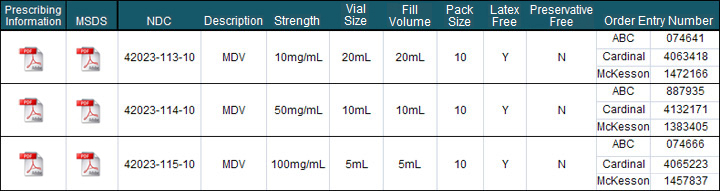
Product Profile:
- Latex Free
- Preservative Free
- Bar Coded
| WARNING Drugs with thyroid hormone activity, alone or together with other therapeutic agents, have been used for the treatment of obesity. In euthyroid patients, doses within the range of daily hormonal requirements are ineffective for weight reduction. Larger doses may produce serious or even life-threatening manifestations of toxicity, particularly when given in association with sympathomimetic amines such as those used for their anorectic effects. |
For treatment of Myxedema Coma and Precoma
- A single dose administered intravenously produces a detectable metabolic response in as little as two to four hours.
- Maximum therapeutic response within two days.
Description
Triostat® (liothyronine sodium injection) (T3) contains liothyronine (L-triiodothyronine or L-T3), a synthetic form of natural thyroid hormone, as the sodium salt.
Indications and Usage
Triostat® (liothyronine sodium injection) (T3) is indicated in the treatment of myxedema coma/precoma.Triostat® can be used in patients allergic to desiccated thyroid or thyroid extract derived from pork or beef.
Contraindications
Thyroid hormone preparations are generally contraindicated in patients with diagnosed but as yet uncorrected adrenal cortical insufficiency or untreated thyrotoxicosis. Thyroid hormone preparations are also generally contraindicated in patients with hypersensitivity to any of the active or extraneous constituents of these preparations; however, there is no well-documented evidence in the literature of true allergic or idiosyncratic reactions to thyroid hormone. Concomitant use of Triostat® and artificial rewarming of patients is contraindicated (See Precautions section of Prescribing Information).
Warnings
See Black Box Warning Above.The use of thyroid hormones in the therapy of obesity, alone or combined with other drugs, is unjustified and has been shown to be ineffective. Neither is their use justified for the treatment of male or female infertility unless this condition is accompanied by hypothyroidism.
Thyroid hormones should be used with great caution in a number of circumstances where the integrity of the cardiovascular system, particularly the coronary arteries, is suspect. These include patients with angina pectoris or the elderly, in whom there is a greater likelihood of occult cardiac disease. Therefore, in patients with compromised cardiac function, use thyroid hormones in conjunction with careful cardiac monitoring. Although the specific dosage of Triostat® depends upon individual circumstances, in patients with known or suspected cardiovascular disease the extremely rapid onset of action of Triostat® may warrant initiating therapy at a dose of 10 mcg to 20 mcg. (See DOSAGE AND ADMINISTRATION section of Prescribing Information)
Myxedematous patients are very sensitive to thyroid hormones; dosage should be started at a low level and increased gradually as acute changes may precipitate adverse cardiovascular events.
Severe and prolonged hypothyroidism can lead to a decreased level of adrenocortical activity commensurate with the lowered metabolic state. When thyroid-replacement therapy is administered, the metabolism increases at a greater rate than adrenocortical activity. This can precipitate adrenocortical insufficiency. Therefore, in severe and prolonged hypothyroidism, supplemental adrenocortical steroids may be necessary.
In rare instances, the administration of thyroid hormone may precipitate a hyperthyroid state or may aggravate existing hyperthyroidism. Extreme caution is advised when administering thyroid hormones with digitalis or vasopressors. (See PRECAUTIONS-Drug Interactions section of Prescribing Information)
Fluid therapy should be administered with great care to prevent cardiac decompensation (See PRECAUTIONS-Adjunctive Therapy section of Prescribing Information)
Adverse Events
The most frequently reported adverse events were arrhythmia (6% of patients) and tachycardia (3%). Cardiopulmonary arrest, hypotension and myocardial infarction occurred in approximately 2% of patients. The following events occurred in approximately 1% or fewer of patients: angina, congestive heart failure, fever, hypertension, phlebitis and twitching.
Please see the full prescribing information link above for additional information.
| MK117C |